Tooling Records
Slitter Knife Software: Tracking Knife Life, Regrinds, and Matched Sets
Slitter knife software tracks the working life of every rotary knife on your line: measured thickness after each regrind, outside diameter, tons cut per edge by material, and which knives belong to a matched set. Those measured numbers, not nominal catalogue values, are what the arbor stack calculation depends on.
Last updated: July 2026
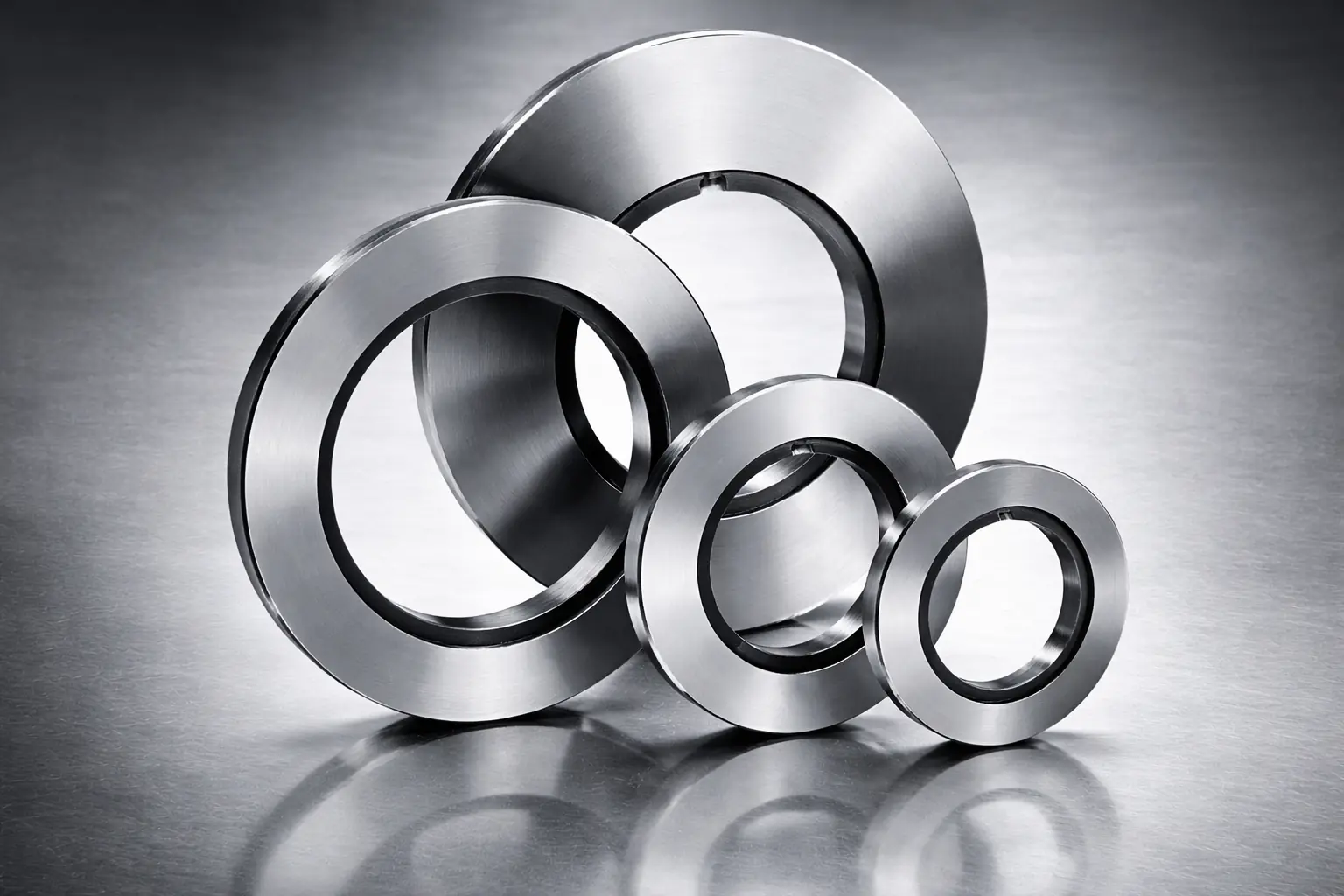
Most slitting operations can tell you what a knife cost. Far fewer can tell you what it measures today, how many tons it has cut on the current edge, or which knives it was ground with. Closing that gap is what slitting knife software is for. It is not the tool that works out the spacer stack; it is the record underneath, and its quality decides whether the stack arithmetic is worth anything.
What does slitter knife software actually do?
Strip out the marketing and the job is narrow. A knife record holds four things for every rotary knife you own:
- Identity. A serial or stamped number so the knife can be found again.
- Measured dimensions. Thickness, outside diameter, and bore, taken after the last grind rather than copied off the order.
- Accumulated work. Tons cut and material run on the current edge.
- Relationships. The matched set it belongs to, its top or bottom position, and its current status: in service, awaiting grind, at the grinder, or retired.
Status is the field most often missing and the most disruptive, because a setup calculated against a knife sitting at the grinder is a setup nobody can build. Bore matters just as much across multiple lines: a knife with the wrong bore is not a substitute, it is a knife for a different machine.
Why do nominal knife thicknesses drift a setup out of tolerance?
This is the most useful thing to understand about knife records, and it is geometry rather than software. A pocket, the spacer stack between two knives, is built to the strip width minus one knife thickness, because each knife is shared at the boundary between neighbouring strips. Knife thickness therefore sits directly inside the width arithmetic. Use a number that is wrong by a few hundredths and every boundary in the build inherits the error.
A new knife matches its nominal thickness. After the first regrind it does not, because grinding removes whatever it takes to clear the damage on that edge, and no two knives in the drawer drift by the same amount. If your setup sheet still uses the figure from the original purchase order, you are not calculating the stack, you are estimating it and correcting on the floor.
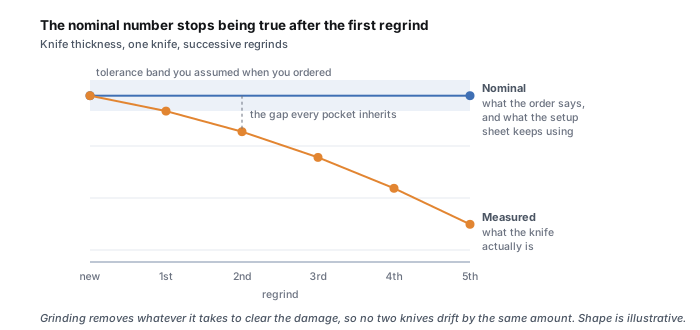
The symptom is familiar: strips consistently narrow or wide by a small amount, with the error changing when a different knife set goes on. Crews chase it as a spacer or clearance problem. It is neither, and the slitting problems guide works through the other causes.
How do you record measured thickness after each regrind?
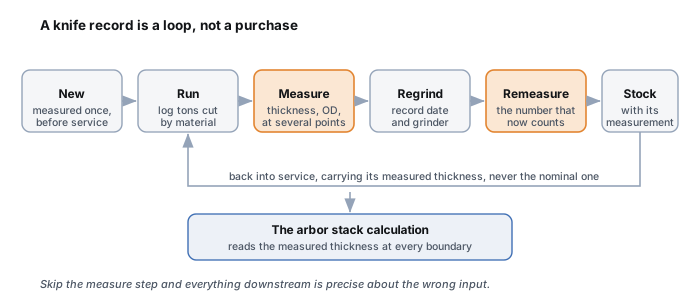
The practice that makes everything else work is easy to state and easy to skip: a knife does not go back in the drawer until it has been measured and the measurement written against its identity. Measure at several points around the knife rather than one, because a grind can leave it slightly out of parallel, and record the spread as well as the value. A knife out of parallel with itself will not hold width however carefully the stack is built.
Outside diameter belongs in the same entry. It shrinks with grinding too, and while it stays out of the width arithmetic it changes knife overlap and the knife to ejector ring relationship, which is why ring fit should be rechecked after regrinds; the slitting line tooling guide covers that. Record the date and the grinder as well, so a problem with one grinding source becomes visible instead of averaging into the noise.
How do you schedule regrinds before quality drops?
Regrind scheduling done badly is a calendar entry. Done well it is a threshold: a knife comes off the line at a tonnage you have established for that material, or sooner if edge quality says so. The calendar version fails in both directions, pulling knives that had life left and leaving in knives that started making scrap two hundred tons ago.
The threshold has to be yours. Published tonnage figures assume a gauge, a grade, a line speed, and a clearance that are probably not yours. What you are building toward is your own table: this material, this gauge, this knife spec, this many tons before the edge goes. Edge quality stays the override, and if burr height climbs before the threshold, the knife comes off and the threshold gets revised down. The rotary slitter blade life guide covers the regrind economics in more depth.
How do you log tons per edge by material?
The mechanics are unglamorous. At the end of a run, the tonnage that went through is added to the current edge of the knives that cut it, tagged with material and gauge. When the knife goes for grinding the total closes out as one edge life and the counter resets. Over a year that produces a distribution rather than a single number, and the spread is as useful as the average.
Splitting by material is what makes it actionable, because a blended average across everything you run describes none of it. Operations running advanced high strength steel or thin electrical steel for motor laminations usually find the gap between grades is wider than they assumed. One caution: tons per edge also measures your clearance, line speed, and guiding, so a sudden fall across all knives is a line problem, not a bad batch of tooling.
What is a matched set and why does breaking one cost you?
A setup uses several knives at once, so what matters is not how close each knife is to nominal but how close the knives are to each other. A matched set is a group ground together to the same thickness and kept together, and its value is that the spread within the set is small and known. Build a job from one and whatever error remains is at least consistent across the arbor.
Sets get broken under pressure. A job needs one more knife, the drawer has one that is close enough, and on it goes. The immediate result is usually acceptable, which is the problem, because the cost arrives later as untraceable width variation. If the record says which knives went on which job, a complaint two weeks later is a lookup rather than an argument. When rebuilding sets, source from a maker grinding to your existing bore and tolerance, such as Maxwell Slitter Industries, so a new knife joins the set instead of widening it.
Want to see how far a knife thickness error moves finished width? Put your measured thickness into the free calculator and compare it against the nominal value.
Open the free calculatorHow do knife records feed the arbor stack calculation?
Here the record stops being bookkeeping and starts paying. The stack calculation needs a knife thickness for every boundary. Take it from maintained measurements and the pockets are computed against reality, so the setup assembles as printed. Take it from a nominal value and the calculation is precise about the wrong input, leaving the crew to close the gap with trial cuts. Knife records answer what is true about the tooling; the stack calculation answers what to build from it.
In OptiStack Pro, knives sit in inventory with measured thickness, outside diameter, bore, and tolerance, and the solver builds each arbor stack from those stored measurements rather than a nominal figure, in metric or imperial. A dedicated Knife Management module covering pairs, wear history, and replacement planning is in development and currently shows as Coming Soon in the app, so the tonnage logging described above still belongs in your own sheet or maintenance system today. For assembling the stack itself, see how to set up a slitting line arbor.
How do you start without a big rollout?
You do not need a system to start, you need a rule: no knife returns to service without a measured thickness recorded against its identity and the date. Add tonnage logging next, because it takes longest to become useful and so repays the earliest start.
Begin with the knives you use most rather than the whole drawer, since common thicknesses turn over fastest and appear in the most jobs. The failure to avoid is the full audit that stalls halfway, which is worse than an honest partial record because nobody knows which half to trust.
Frequently Asked Questions
What is slitter knife software?
Why does knife thickness matter more than knife diameter?
How much does a slitter knife lose per regrind?
What is a matched set of slitter knives?
What is tons per edge and why log it by material?
Does OptiStack Pro track knife life today?
Build every stack from measured knives, not nominal ones
OptiStack Pro keeps your knives and spacers in one inventory and computes each pocket from the measurements you stored, so a setup sheet assembles as printed. Start a free 14 day trial, no credit card.
Start free trial